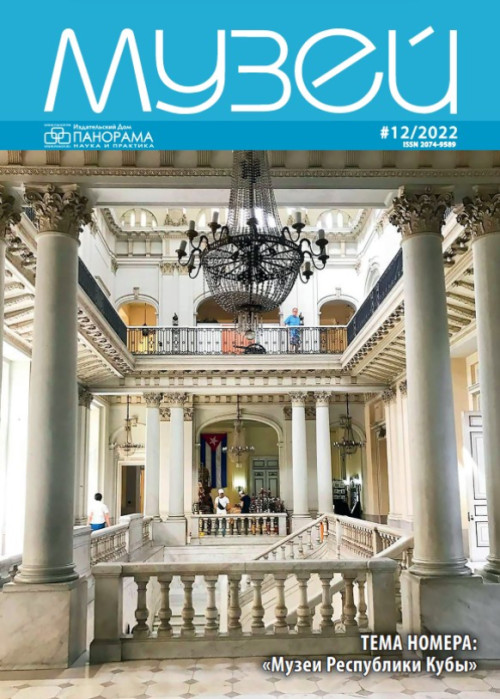
The National Museum of Fine Arts in Havana is the largest art museum in Cuba, one of the most popular places among guests of the capital of Liberty Island. Here you can see the work of French, Spanish, English, Dutch, Italian masters. In total, about 1,200 items of sculpture, painting, jewelry and graphic works are exhibited on a total area of more than 7 thousand square meters. An important part of the exposition is devoted to Cuban art from the colonial period to the era of building socialism.
The Museum of the Revolution in Havana is located in the building of the former presidential palace and is the key among more than three hundred museums on Liberty Island, one of the most popular among tourists. The beautiful palace is a real decoration of Havana, and its exposition tells, about the most important events in the history of Cuba — the period of the 1950–1960s, when the country fought for independence.
Liberty Island in different eras remained incredibly attractive for people of various professions, views and aspirations. So, Che Guevara became famous all over the world for his revolutionary activities in Cuba — he was born into a family of Argentine Creoles in Rosario (Argentina). The outstanding American writer Ernest Hemingway lived in Cuba for about 20 years. But another famous Cuban hero — a revolutionary, poet and publicist, Jose Marti, was forced to live away from his homeland almost all his life. Alexander von Humboldt, the eminent German geographer, stayed in the city of Trinidad for only a few days, but today his name is associated with the study of the flora and fauna of the entire island. Today, memorial complexes and house-museums of outstanding heroes of world culture — literary, scientific, revolutionary — have been opened in Cuba.
In 1958, in the city of Santa Clara, one of the largest cities on the Island of Liberty, armed battles took place under the control of the famous revolutionary Ernesto Che Guevara. These few battles had a significant impact on the course of the Cuban Revolution. In memory of this, in 1987, the mausoleum of Che Guevara was built in Santa Clara. Today the mausoleum is one of the key attractions of the city and the country.
Museology in Cuba began to develop actively after the Cuban Revolution, since 1959. Since that period, the country has seen an active growth in the number of museums, relevant legislative documents are being developed, and a process of paradigm shift is taking place: museums cease to perform exclusively the function of preserving and protecting the cultural heritage of the nation and take on the function of enlightenment and education.
The article summarizes the most important characteristics that determine the objects of the historical heritage of the city. The historic center of Santiago de Cuba is regarded as an area recognized as part of the tangible and intangible heritage.
The fortress of San Pedro de la Roca (Spanish: Castillo de San Pedro de la Roca) is a defensive structure built to protect the bay of the city of Santiago de Cuba in the middle of the 17th century. This is a magnificent fortress, located on a cliff in front of the bay in the port of Santiago. For many centuries, the city remained the second most important after Havana, today this imposing fortress is included in the UNESCO World Heritage List. Inside the fortress there is a museum of piracy.
Havana is a real open-air museum of vintage cars. These cars — bright, colored, preserved in excellent condition, have become a real symbol of the Island of Freedom, they complement the unique spirit of Cuba, its atmosphere. Vintage cars make up about half of the entire fleet on the streets of Havana, creating the illusion of time travel. Therefore, it is not surprising that in the center of Havana there is the Vintage Car Museum, which has one of the largest collections of vintage cars in the world.
The Africa Museum was opened in Cuba on January 6, 1986. Its main task is to demonstrate and popularize the culture and art of Africa, their influence on the formation of Cuban identity. This is the only museum in Latin America dedicated to the history of slavery in the Caribbean, it is actively involved in social projects related to the study of African culture in Cuba.
Museum employees are required to comply with all clauses of the employment contract and job description. Any actual violation of these documents entails the application of sanctions under the Labor Code of the Russian Federation (from reprimand to dismissal). Attempts to challenge the imposed punishment in court are completed successfully if the employer, while bringing the subject to responsibility, committed real and obvious procedural violations of the order (for example, missed the deadlines, did not request written explanations on the fact of violations identified, and so on). Otherwise, the appeal will not make sense.