Brest is a cozy old city on the western border of Belarus, one of the oldest cities in the country. Brest is known, first of all, for the heroic feat of the defenders of the Brest Fortress, on the territory of which the world-famous memorial complex “Brest Fortress — Hero” is located. Near the complex there is another museum — the Brest Railway Museum. Instead of glazed showcases, there is a railroad track, and instead of traditional exhibits, there are grandiose examples of railway equipment throughout the history of the existence of railways.
Landscapes of Vitebsk can be found on many canvases by the famous avant-garde artist, one of the best artists of the 20th century, Marc Chagall. A native of the Vitebsk region, until his death, he kept love for his native land, and it was thanks to this love that the small Belarusian city was known in every corner of the globe. In the house on Pokrovskaya Street, where the future artist grew up, after his death, the House-Museum was created, which became the most popular and visited museum in the city.
The Gomel Palace and Park Ensemble is one of the very first museum institutions in Belarus, a unique complex of monuments of architecture, history and nature. The ensemble includes six museum objects, among which are architectural monuments of the 18–19th centuries, included in the State List of Historical and Cultural Values of the Republic. Among them are the palace of the Rumyantsevs and Paskeviches, the chapel-tomb of the Paskevich princes, the Winter Garden, the Khaletsky estate, an observation tower, and an old park.
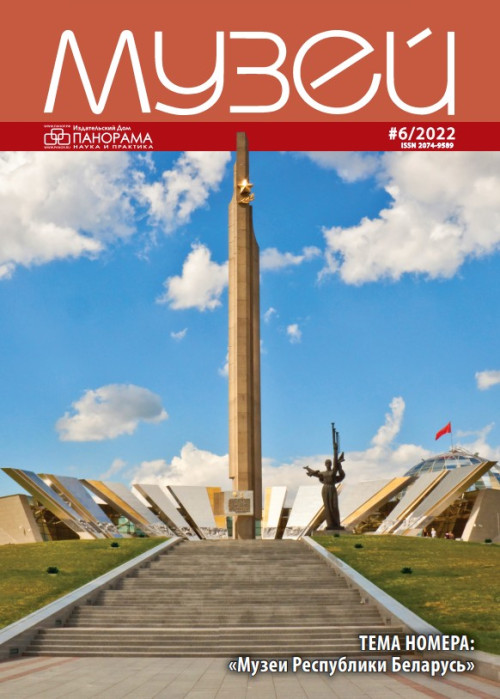
The Belarusian State Museum of the History of the Great Patriotic War is the most visited museum in the Republic of Belarus. Its exposition occupies 10 halls with a total area of 15,000 sq. m, more than 155 thousand exhibits are stored in the museum funds. The museum’s collection is represented by personal belongings, photographs, letters, archival documents of participants in the Great Patriotic War.
The memorial complex “Brest Fortress — Hero” is a unique monument of the great feat of the Soviet soldiers, the defenders of the Brest Fortress, who took the first blow of the enemy upon themselves. Today, only 30% of its territory has a tourist infrastructure; it was not possible to restore the remaining 70% after the devastating battles of the Great Patriotic War. On the territory of the memorial complex there are several museums and monuments that reveal the history of the most terrible events in the history of the city.
In 1966, in memory of thousands of victims and hundreds of Belarusian villages destroyed by Nazi punitive detachments, the Central Committee of the Communist Party of Belarus decided to create a memorial complex “Khatyn”. The village of Khatyn, destroyed by the Nazis with all its inhabitants on March 22, 1943, has become a terrible symbol of the mass destruction of the civilian population by the Nazis and collaborators on the territory of the occupied USSR. On the spot where once the village was reduced to ashes, a memorial complex was built.
The historical and cultural complex “Stalin’s Line” is a unique fortification complex on the territory of the Republic of Belarus, created on the occasion of the 60th anniversary of the Victory of the USSR on the initiative of the “Memory of Afghanistan” charity foundation. Public and state organizations, private enterprises and enthusiasts who are not indifferent to the history of their country took part in the construction work. The main work, the most difficult, was undertaken by the units of the engineering troops of the Republic of Belarus. The grand opening of the open-air military history museum took place on June 30, 2015, 20 km from Minsk.
The fi rst museums of folk architecture in the open air began to appear in the late 18th — early 19th centuries in the form of the first private collections of architectural monuments and ethnographic museums. The first such museum was created in 1891 by the Swedish ethnographer Artur Hatzelius and was named “Skansen”. The practice of the countries of Eastern Europe and scientific methods served as the foundation for the formation of Belarusian museums of folk architecture in the 20th century.
The Children’s Museum in the city of Polotsk is the only state museum in the republic entirely dedicated to childhood and children. In its space, diverse both in form and content, children can make amazing discoveries about the world around them in an easy and accessible way, and adults can once again experience carefree and joyful emotions from childhood. The museum was opened in 2004 on the initiative of the famous Belarusian teacher T.A. Dzhumantayeva.